Wednesday, March 7, 2018

Sierra Nevada Bighorn Sheep - Ethan Rohlf


The Sierra Nevada Bighorn Sheep
 (Ovis canadensis sierrae)
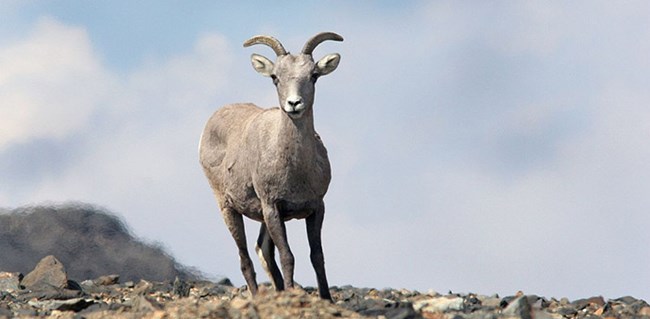
A bighorn ewe stands atop a ridge in the Sierra Nevada.
Description and Ecology
The Sierra Nevada bighorn sheep varies in appearance. The color of their coat can range from white to dark brown. Both male and female sheep have permanent horns. These horns vary in color from yellowish-brown to dark brown depending on the age of the sheep. Horns of male sheep curl up, back over the ears, then curve down, forward, and up past the cheeks. In contrast to the massive horns of males, horns of females are much more slender and never form more than half a curl. Adult male sheep stand up to 3 feet tall at the shoulder and weigh up to 220 pounds and females 63 kilograms (140 pounds). Both males and females grow to about 5 feet in length The male sheep(rams) live 10-12 years, while females(ewes) live 12-20 years.
Sierra Nevada bighorn sheep select open habitats that allow them to detect predators and escape up terrain that their pursuer cannot ascend. This terrain is typically rough, rocky and steep. Bighorn sheep can be found as high as 13,120 feet and as low as 4,750 feet. Their biology allows them to be flexible in their food consumption. They eat the grasses, sedges and rushes that grow in their habitat.
Yosemite Conservancy is reintroducing iconic Sierra Nevada bighorn sheep into the high country.
Geographic and Population Changes
The Sierra Nevada bighorn sheep used to reside across the Sierra Nevada Mountains from Sonora Pass to Olancha Peak. Today, the northmost herds live near the eastern boundary of Yosemite National Park while the southernmost are on the boundary of Sequoia National Park. In 1995, the bighorn sheep population was at an all-time low with only about 100 sheep remaining. As of today, there are an estimated 325-350 individuals.  


Listing Date & Type of Listing
After an emergency listing under the federal Endangered Species Act, the Sierra Nevada Bighorn sheep was added to the list of endangered species on January 3, 2000 after being reclassified from threatened to endangered in California during 1999. Sierra Nevada Bighorn Sheep are listed currently as an endangered species.

Cause of Listing & Main Threats to Continued Existence
Populations of Sierra Nevada bighorn sheep began to decline in the 1870’s after settlers that moved to California for the gold rush brought disease-carrying domestic sheep. The Sierra Nevada bighorns lacked resistance to some of the diseases, which caused them die out. This progressed until the bighorns were locally extinct in the northern Sierras. By 1978 there existed only three herds with 250 total sheep. One reason that the bighorns were affected so severely by the domestic sheep was due to a lack of genetic diversity. Experts fear that another introduction of foreign disease could threaten the bighorn’s recovery. Also, because of already low genetic diversity and barriers that separate herds, conservationists are concerned about ways to increase genetic diversity within the species. Lastly, a concern is that the small herds of bighorns are more susceptible to predation.

Description of Recovery Plan
A recovery plan for Sierra Nevada bighorn sheep was created in 2008 with a primary objective to attain sustainable population sizes and geographic diversity of bighorn ship. Conservationists hope to ensure the long-term viability of the species in the Sierra Nevadas. Monitors will protect existing herds by maximizing population growth managing predation and preventing contact between bighorns and domestic sheep. They also hope to reintroduce sheep to certain herds while monitoring and acting (if necessary) to maintain the genetic variation of the herds.

What can you do?
The most important part of helping a species recover is being aware of the factors that affect the recovery of species. To help bighorn sheep you should be aware of your ecological footprint while hiking in the Sierra Nevadas. Leaving trash and plastic or destroying the local flora of the region is harmful to the longevity of the sheep. For ranch owners at the base of the Eastern Sierras in places like Visalia, it is important the you keep your sheep in captivity, as they could transmit harmful disease should they come in contact with the bighorns.
To donate to the Sierra Nevada Bighorn Sheep Foundation - http://sierrabighorn.org/donate

Other Resources
To see more photos of the Sierra Nevada Bighorn Sheep –http://digitalmedia.fws.gov/cdm/search/searchterm/Sierra%20Nevada%20bighorn%20sheep/order/nosort
To learn more about the critical habitat - https://ecos.fws.gov/ecp/report/table/critical-habitat.html
To follow the recovery of the bighorns - https://ecos.fws.gov/docs/recovery_plan/080213_1.pdf


References
Endangered Species Program | Species. www.bing.com/cr?IG=A89934B026414C669A479F92F31A859C&CID=280BE154B34265F81E41EAF8B2ED645A&rd=1&h=7MdsaDd5rVXzySNGlDCVp20ISu1cNkZeBWIbdZBUuE0&v=1&r=https%3a%2f%2fwww.fws.gov%2fendangered%2fspecies%2findex.html&p=DevEx,5108.1.
“Home.” Sierra Nevada Bighorn Sheep Foundation, sierrabighorn.org/.
“Home.” Yosemite Conservancy, www.yosemiteconservancy.org/.
“NPS.gov Homepage (U.S. National Park Service).” National Parks Service, U.S. Department of the Interior, www.nps.gov/.
U.S. Fish and Wildlife Service/Endangered Species, Sarah Leon. “Find Endangered Species.” Official Web page of the U.S. Fish and Wildlife Service, www.fws.gov/endangered/.


Southern sea otter - Sierra Ramer

Southern Sea Otter

https://mountainandsea.org/the-effort-to-re-introduce-
sea-otters-to-southern-california/
http://www.facts-about.info/sea-otter/

Description and Ecology
The southern sea otter (Enhydra lutris nereis) is a marine mammal that is found on the coast of California, from around San Mateo county to southern Santa Barbara county. Their sizes usually span up to 4 feet, females can weigh up to 50 pounds and males up to 70. They are the smallest marine mammals in North America. Their habitat is the kelp forest and their diet consists of crabs, snails, urchins, clams, mussels and other invertebrates. They eat an equivalent of 25% of their body mass in food each day, spending about 20-50% of their day on the hunt.The southern sea otter is a keystone species for the kelp ecosystem in the Pacific ocean. Due to their diet of sea urchins and other invertebrates, they help the kelp forests. Without sea otters, the sea urchins and invertebrates would devour the kelp and destroy the kelp beds. Kelp is home to many other species so destroyed kelp beds would affect the entire ecosystem. They belong to the weasel family, their relatives include weasels, river otters, and ferrets. However, they are the only exclusively marine member of the family. Different from most other marine mammals, these sea otters do not have an extra layer of blubber to stay warm in the cold Pacific ocean. Instead, sea otters have the world’s densest fur - with more than a million hairs per square inch on their body. 
https://seaotters.com/tag/kelp-forests/
This is crazy considering most humans only have an average of 100,000 hairs on their entire head. In order to keep their fur waterproof, sea otters must groom their fur coat for most of the day as their natural oils and insulated air bubbles help do so. Sea otters are monogamous and live in family groups. They have one mate for life and have little baby pups together, then the oldest pups actually help take care of the younger siblings.

Geographic and Population Changes
The southern sea otters have a long and rather sad history. In the 1700 and 1800s, these otters actually lived from Baja California, around the Pacific Rim, all the way to Russia and Japan. Unfortunately, they were hunted for their fur and now they are only found on the coast of California, only 13% of their original geographic range. In 1938 the Californian population was at a mere 50 individuals, but currently there are about 3,000 hanging out along the coast.


https://www.usgs.gov/media/images/sea-otter-density-map
The Southern sea otter species is only found in the small range on the California coast on this map. The other yellow range from Alaska to Japan is for the other subspecies, the Northern sea otter.
https://www.seattleaquarium.org/sea-otters


Listing date and type of listing
The Southern sea otters were first listed as threatened in 1977 under the Endangered Species act. After this listing, they were recognized as depleted under the Marine Mammal Protection Act. They are “fully protected” mammals under the California State Law. 


http://www.chinanews.com/tp/hd2011/2013/01-
30/170559.shtml
Cause of listing and main threats to its continued existence
The Southern sea otters were listened as threatened due to the reduced small size and range of the population and potential risk of oil spills. However, since the listing in 1977, several other reasons have been recognized, including the effects of pollution and fisheries. Due to the absence of oil spills and the population size not increasing as fast as hoped, there are more threats being considered. An interesting, and more recent threat to the Southern sea otter population is shark attacks. The great white shark, another protected species in California, is an apex predator along the coast. In 2003, there was an exponential increase in shark attacks on otters. The great whites only bite the otters but do not eat them. In 2014 and 2014, about 270 otters died due to these attacks. Biologists still are uncertain why there is the sudden increase in shark attacks on otters. These attacks are affecting the population due to it's vulnerability at this time. 

Description of Recovery Plan
The ultimate goal of the recovery plan is to delist the Southern sea otters after establishing long term-growth in population size and density. The primary objective of the plan is enforcing the optimal conditions for species growth. The actions included in the plan are determining the reason why there is a lack of growth and how to change it, efforts to reduce potential of oil spills, and efforts to reduce accidental catches in fishery net and traps. In 1987, the U.S. Fish and Wildlife Service began translocating Southern sea otters to San Nicolas Island in Ventura county. The goal was to create a thriving experimental colony of sea otters in Southern California. Unfortunately, out of the 140 sea otters translocated, only 13 of them were thought to have stayed in the location after their release but then those 13 were presumed to have returned to the parent population, moved to a management zone or have died. This translocation program was deemed a failure and was discontinued from the recovery plan. In order for delisting of the species under the Endangered Species Act, the population must include at least 3,090 individuals for three years. However under the regulations of the Marine Mammal Protection Act, the population will probably have to include at least 8,400 individuals in California to be considered a significant functioning species in the ecosystem again.

What can you do?
There are many things you can do to help the Southern sea otters!

  • Adopt a symbolic sea otter!
https://secure.defenders.org/site/SPageServer?pagename=wagc_seaotter&s_src=3WEW1800XXXXX&s_subsrc=030718_adopt_body_sea-otter/how-you-can-help


  • Donate to the California Sea Otter Fund through your income tax forms. This fund helps protect the sea otters and encourage their recovery. Here are the instructions.


  • http://inotternews.com/?hg=0&paged=90
    Take Action - Help fight against the new executive order allowing the expansion of offshore drilling along the coast. If implemented, the potential risk for oil spills would increase and possible effects would be devastating to the sea otter population in California. Write or call your elected officials to help protest this decision. This is a petition you can sign to send to our federal government to protest!
  • https://commons.wikimedia.org/wiki/
    File:Sea_otter_Monterey_Bay_aquarium.jpg
    Learn more about our local sea otters! Awareness is key for conservation so go out and visit some local spots like Pirate’s Cove or Morro Bay to see these cute creatures. Or go check out the Monterey Bay Aquarium which has an awesome Southern sea otter exhibit!!!

These are some easy changes to your lifestyle that can help both the otters and the ocean!
http://www.everintransit.com/best-beaches-in-california
-north-point-morro-bay/

  • Switch to vegetable and fruit based detergents and household cleaners.
  • Use paper bags.
  • Avoid plastic and Styrofoam packaging of any kind.
  • Refill and reuse containers when appropriate.
  • Use public transportation when you can.
  • Consider joining a carpool.

  • Walk or bike when running short errands.


Here is a fun little video of some otters in our very own Morro Bay😮 🌊


Other Resources if you want to learn a little more about the Southern sea otters
Works Cited

“Basic Facts about Sea Otters.” Defenders of Wildlife, 19 Sept. 2016, defenders.org/sea-otter/basic-facts.

“Mysterious Great White Shark Attacks on Sea Otters Surge.” National Geographic, National Geographic Society, 23 June 2016, news.nationalgeographic.com/2016/06/great-white-sharks-attack-sea-otters-california/.

Service, U.S. Fish and Wildlife. Species and Populations with Recovery Plans, ecos.fws.gov/ecp0/pub/speciesRecovery.jsp?sort=2.

“Southern Sea Otter.” Southern Sea Otter, Kelp Forest, Marine Mammals, Enhydra Lutris Nereis at the Monterey Bay Aquarium, www.montereybayaquarium.org/animal-guide/marine-mammals/southern-sea-otter.

“Southern Sea Otter.” Ventura Fish and Wildlife Office, www.fws.gov/ventura/endangered/species/info/sso.html.

“Southern Sea Otters.” The Marine Mammal Center, www.marinemammalcenter.org/science/Working-with-Endangered-Species/southern-sea-otters.html.


    Mexican Wolf- Dillon Romero

    Mexican Wolf
    Canis Lupis Baileyi
    By: Dillon Romero

    Species Description
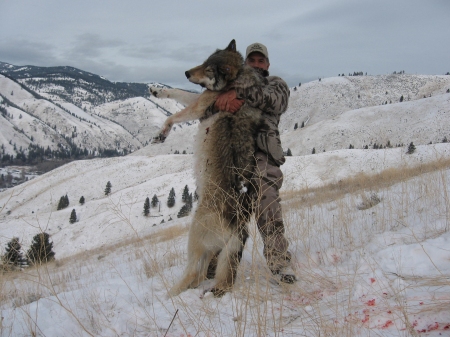
    The Mexican Wolf is a subspecies of gray wolf commonly referred to as "El Lobo". These wolves often have gray with light brown fur on their backs with long legs and a sleek body enabling them to run very fast. These wolves used to have a very abundant population in the thousands, however, have faced massive population declines since the early 90's. During their prime, the Mexican Wolf was a "top dog" in the borderlands and kept the Southwest's ecosystem in balance. The Mexican Wolf ranges from 26-32 inches tall and 4.5-5.5 feet long with a weight of 60-80 lbs. Typically, males are heavier and taller than the females. The lifespan of these animals has been determined to be 15 years in a captive setting. In terms of reproduction, these wolves mate in mid-February to mid-March. The females have a gestation period of 63 days, producing 4-7 offspring.


    Geographic and Population Changes
    The Mexican Wolf lives in packs and is native to the Southwestern United States and Mexico. However, after being completely wiped out from the U.S and with only a few remaining in Mexico, they were brought into captivity to try and save them. These wolves need large areas of forested terrain, grasslands, and scrublands along with a large population of deer and elk to support their packs. Currently, they are being re-introduced to the Apache National Forest in Arizona, the Gila National Forest in New Mexico, and the northern Sierra Madre Occidental of Chihuahua and Sonora in Mexico. This is very important because we are seeing these wolves return to living in their native regions and regain the balance to those ecosystems.


    Listing Type and Date
    The Mexican Wolf was listed as an endangered species in 1973 and protected under the Endangered species act. The Mexican Wolf recovery plan was introduced in 1982 to halt extinction and determine if they could be reintroduced to the wild. In order to continue the push to preserve this species, the first revision to this plan was introduced this past November and actually developed a plan to preserve these wolves in the wild. This current recovery plan still lists the Mexican Wolves as E (endangered) and is in the plan stage RF(1),  meaning that the final revision has been approved by the Regional Director.

    Cause of Listing and Continued Threats
    The Mexican Wolf was placed on the endangered species list as a result of predator eradication programs in the late 1800's to mid 1900's. These programs completely wiped the Mexican Wolf population from the U.S and nearly Mexico too. In addition to this, it was determined that the Mexican Wolf suffered from genetic issues and small population size, both which contributed to their near extinction. Looking forward to the new recovery plan, these wolves are still at risk of not succeeding in their re-introduction to the wild. These continued threats are the excessive human-caused mortality, demographic stochasticity associated with small population size, and loss of gene diversity. These factors continue to hurt the Mexican Wolf populations and play a major factor in the re-introduction of this wolf subspecies.

    Recovery Plan
    Under the original Mexican Wolf Recovery Plan, a captive breeding program was formed with three effective founder wolves captured from the wild in Mexico. This allowed the species to be saved from extinction and develop healthy, successful lineages of the Mexican Wolf for use in the new Mexican Wolf Recovery Plan. The new plan is utilizing these lineages that were generated from the three wolves captured in Mexico in order to reintroduce the Mexican Wolf into the wild. The plan seeks to establish and maintain two resilient, genetically diverse Mexican Wolf populations distributed across their geographic range in the U.S and Mexico. The recovery strategy takes into consideration the continued threats towards the wolf populations and vows to monitor these threats. More specifically, the plan ensures that Mexican Wolf populations can achieve the resiliency, representation, and redundancy needed to remove them from the endangered species list. This plan is expected to take 25-35 years and cost $178,439,000 to be implemented through 2043 when the Mexican Wolf is expected to be recovered. A more in-depth view of the plan taken from the Mexican Wolf Recovery Plan Revision is below:  

    1. Increase the size of two Mexican wolf populations; 
    2. Improve gene diversity and maintain the health of Mexican wolves; 
    3. Ensure adequate habitat availability to support viable Mexican wolf populations; 
    4. Maintain the Mexican Wolf Species Survival Plan (SSP) captive breeding program to improve the status of wild populations; 
    5. Promote Mexican wolf conservation through education and outreach programs; and 
    6. Ensure recovery success. 

    This plan lays out the necessary requirements that need to be completed in order to successfully remove the Mexican Wolf from the endangered species list.

    What Can You Do?
    There are many things that people can do to help save these animals and restore them back to the wild. First, you can Take Action by sending messages to government officials. This allows you to make the Mexican Wolf's situation known to officials who can make a difference. Next, you can learn How To Be A Powerful Advocate for wildlife in order to speak up for the Mexican Wolf who does not have a voice. Third, you can Sign Up To Receive Instant Alerts and Updates about the Mexican Wolf's situation and progress during the recovery plan. Finally, you can Become a Defender of Wildlife in order to receive articles and pictures of current wildlife issues. By completing at least one of these actions, the Mexican Wolf becomes that much closer to returning to their rightful home. 
    Other Resources
    For more information about the Mexican Wolf and the recovery plan that is in action, you can visit the following links:
    1. https://ecos.fws.gov/docs/recovery_plan/2017MexicanWolfRecoveryPlanRevision1Final.pdf
    2. https://defenders.org/mexican-gray-wolf/basic-facts
    3. https://mexicanwolves.org/index.php/about-wolves
    Sources

    About Mexican Gray Wolves.” Mexicanwolves.org, mexicanwolves.org/index.php/about-wolves.

    “Basic Facts About Mexican Gray Wolves.” Defenders of Wildlife, 30 Mar. 2016, defenders.org/mexican-gray-wolf/basic-facts.

    Service, U.S. Fish and Wildlife. Species and Populations with Recovery Plans, ecos.fws.gov/ecp0/pub/speciesRecovery.jsp?sort=2.

    Photo sources (In order):
    https://media.mnn.com/assets/images/2017/04/mexican-gray-wolf-in-snow.jpg.600x315_q80_crop-smart.jpg

    https://can2-prod.s3.amazonaws.com/petitions/photos/000/019/977/original/Mexican-Gray-Wolves-CWC.jpg

    https://bloximages.chicago2.vip.townnews.com/willcoxrangenews.com/content/tncms/assets/v3/editorial/2/68/26859b22-1ff1-11e3-9651-0019bb2963f4/5238e6553040e.image.jpg

    https://amedia.britannica.com/700x450/58/3058-004-7AB9F109.jpg

    https://i.pinimg.com/736x/87/0b/75/870b751880f1f16ad571367ffa4b7017--grey-wolves-in-michigan.jpg

    http://lazerhorse.org/wp-content/uploads/2013/09/How-Big-Tall-Is-A-Wolf-Hunters-Mexican-Gray-Wolf.jpg

    http://www.wolfhaven.org/wp-content/uploads/2014/05/gray-wolf-release.jpg


    Grizzly Bear- Natalie Ramos


    Grizzly Bear
    Description and Ecology:
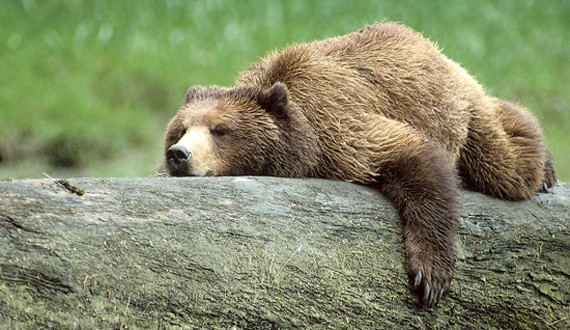
    The California Sate animal, the Grizzly Bear (Ursus arctos horribilis), is known to be larger than the black bear and has distinguishable long curved claws and humped shoulders. Their coloring ranges from a light brown to almost black. Males grizzlies can weigh nearly 400-600 pounds and females can weigh 250-350 pounds. Adult grizzlies stand at about 4 feet when on all fours but if standing on their rear legs they can tower at over 8 feet. Because grizzlies have a broad habitat tolerance they have been able to be successful omnivores although they have digestive systems of a carnivore. Grizzlies are easy-going solitary wanderers and will prey and scavenge on almost all available food.


    Geographic and Population Changes:
    Historically the Grizzly ranged from the mid-west plains to the California Coast and even south into Texas and Mexico. Now the grizzly is found in four ecosystems: The North Cascade of Washington, The Northern Continental Divide, Yaak in Montana and the Selkirks of Idaho and Washington. The Grizzly bear was originally known to be dispersed throughout Western North America rom Central Mexico to the Arctic Ocean. Between 1800 and 1975 grizzly populations dropped from estimates of 50,000 to 1,000. Due to both an increase of unfavorable environmental conditions from westward expansion, fur trapping, mining and farming caused the sharp decline in the population. With the increase of human interaction causing habitat deformation and illegal hunting is the main reason for the decline of the Grizzly bear population. 


    Listing Date and Type of Listing:
    The Grizzly bear was originally listens as threatened on July 28, 1975. According to the U.S. Fish and Wildlife service the recovery plan for the grizzly was approved January 29, 1982. Protection for the Grizzly bear under the Act for protecting these beautiful creatures is extremely detailed. The possession, transportation, taking, sale and receipt of a grizzly bear or parts thereof will result in a fine up to $50,000 and one year is prison for a criminal conviction and up to $10,000 in civil penalties.

    Cause of listing and Main threats to its continued existence:
    While bears do kill each other, the natural mortality rate and the causes of natural mortality is not well known. The cause of listing and its continued threat to existence are from human-caused mortality and interactions. Grizzly bear habitat has faced a steady decrease from the initial westward expansion of settlers in North America; at first grizzlies would attempt to avoid contact with humans but now humans lure them in with their waste products from construction, recreational and residential areas that have invaded their habitat. The result of the habitat invasion has allowed these bears to learn to cause damage to property, eat livestock and become a threat to humans. And because of these negative behaviors they have learned it has cause illegal shootings, contributing to the cause of the decline in grizzly population. Other human induced complications to grizzlies include: direct human confrontation with hikers, backpackers, hunters ect; careless livestock upkeep; protection of livestock; the use of grizzly habitat for economic value/gain; and lawful and illegal hunting.


    Recovery Plan:
    The recovery plan put in place by the U.S. Fish and Wildlife service is to outline the steps needed to take place to facilitate recovery for this species. The estimated cost for this recovery plan is $ 26,000,000. Ultimately the goal is to limit the human-grizzly interaction because we are the main reason for them to be threatened. The specific objectives (U.S. Fish and Wildlife) of this plan are
    1.     Identify grizzly bear population goals that represent species recovery in measurable and quantifiable terms for the ecosystems where the grizzly bear has a suitable habitat.
    2.     Provide the population monitoring approach that will allow determination of recovery levels
    3.     Identify population and habitat limiting factors that account for current populations existing at levels requiring threatening status under the Act.
    4.     Identify management measures needed to remove population and habitat limiting factors so that populations will increase and sustain themselves at levels identified as the recovery goals.
    5.     Establish recovered populations in each of the ecosystems where habitat is available to sustain grizzly bear population.


    What you can do:
    You can directly help save a species. When enjoying the outdoors throw away your waste in a secure area so that bears do not have access to it and encourage others to do the same. Take action by reaching out to government leaders limiting habitat for these amazing creatures. Speak up for wildlife and become an advocate for these species that cannot do so. Donate so that more efforts can be made to protect the grizzlies and expand their habitat. Taking the initiative and influencing others can create a trend in saving and protecting our state animal. Actions are contagious and let your actions be proof!

    Other resources:
    pictures: